
I feel like I should make a post about this because it’s not something that’s very well-known, and that Americans in particular may need to know about given the uncertain state of our healthcare system at the moment. I’ve wanted to write this out for a while, It’s kind of a long post, so sorry about that!
If you have an emergency and have to go to the hospital, you’ll owe the hospital a lot of money.
(I got into a car wreck and broke my ankle and my arm. My hospital bill was around $20,000)You’ll also owe the ambulance provider, if you need one.
(My ambulance bill was about $800)You may get separate bills from the anesthesiologist or surgeon.
(My anesthesiologist bill was $1,700)You may need follow-up appointments.
(My orthopedic surgeon billed me for the appointments and his surgery together and it was about $1,000)You’ve also got to pay for medical equipment you need afterward, like crutches or a walking boot.
(Mine cost about $75)Altogether, I ended up with almost $24,000 in medical debt from one car accident. That’s a really scary number for someone like me who makes $10/hr at a 12 hour a week job.
I got my debt down to $1075 by making some phone calls and submitting some paperwork.
The first thing I did was contact the hospital. They don’t make it easy to find, but many hospitals (perhaps most hospitals?) have financial assistance programs for people who can’t afford medical bills. I don’t make a lot of money, and I have bills to pay, so they were able to help me.
I called the billing department and asked if they had any assistance programs for low income people who can’t pay their bills. I had to call multiple times, and I got transferred in circles by people who didn’t know what I was talking about. Finally, I got an appointment with someone in “Eligibility Services” (I don’t know what other hospitals call it, if it’s something different). I had to bring my pay stubs and copies of all of my bills. When I got to the hospital for the appointment, nobody knew what I was talking about so I had to wander a little to find where I needed to go. I spoke with the guy in Eligibility Services, and I waited for a decision on how much of the bill they would forgive. A month later, I got a call telling me it was totally forgiven.I did the same thing for my ambulance bill and my anesthesiologist, but the process was a LOT easier. I just had to mail some paperwork and it was totally forgiven.
I didn’t bother with the medical equipment suppliers, since the bills came from separate companies and I didn’t feel like going through the process twice for $75. I was assured at the hospital that they had similar programs for debt forgiveness, so I could have probably avoided paying that too.
The only thing I couldn’t get taken care of was the surgeon/follow-up appointment cost, but they were able to put me on a no-interest payment plan.
Medical debt is scary because it’s something that can come from stuff that’s already really scary. I didn’t need the burden of $24,000 in debt on top of trying to get around on a crutch with a broken arm (it’s not easy, believe me!).. but I can’t imagine what it would be like with a bigger debt or a more severe medical emergency.
I see lots of people in even worse trouble than I was in, both financially and medically. Please know that there are options for you when that GoFundMe doesn’t do enough. Even if your income is higher than mine, it’s worth a shot even for partial debt forgiveness.I am about 900% sure there are people who don`the know this.
PLEASE READ THIS IF YOU LIVE IN AMERICA AND HAVE MEDICAL BILLS
I had to do this once as well and I can ABSOLUTELY confirm that this is true.
Get in contact with the hospital. Don’t just…sit there and let the anxiety grow and panic and then ignore it in an effort to find peace.
Tag: important
Alright folks, I’m sure you’ve all heard about May 15th and its fun astrology shenanigans, specifically about how we should go back to that channeling of imagination some of us did as kids, and use that ferocious spirit to bring things into reality. Well, I’ve come up with a good list of things to focus on with such single minded intensity that they come true, and the more people that believe with all their might, the more power is behind it. This might be pretty American-centered because that’s where I live, but plenty of these are good no matter where you are.
Safer Environment:
- We begin using environmentally friendly forms of energy.
- We put more effort into saving endangered species.
- We find a good way to clean/repair the ocean and begin to do so.
Politics:
- [x politician] is removed from [x office]. I’m personally for getting Trump the hell out of the white house. Of course, “All corrupt politicians are kicked out of their jobs” might also work.
America would lose half its Congress, though.- Large corporations have less, or better yet, no control over the government.
- The government actually listens to its citizens. For example: Net Neutrality is saved because Congress listens to its constituents and we get that 51st vote.
- Countries that need help are helped.
If y’all can, donating to some of these causes is good, too. Pair this up with calling Senators, (or members of Parliament? whatever your legal body is) and with getting out there and being loud and not taking no for an answer. Magic works, yes, but that doesn’t mean it doesn’t need a tangible boost. And if you can’t get out there, that’s okay, too. Just contacting reps is great, and encouraging others to do the same is awesome!
So is this impossible? Maybe. But we’re witches. Impossible is sort of in the job description. And nothing out there is stronger than hope. So here’s to hoping!
Feel free to add more suggestions!
Alright folks, I’m sure you’ve all heard about May 15th and its fun astrology shenanigans, specifically about how we should go back to that channeling of imagination some of us did as kids, and use that ferocious spirit to bring things into reality. Well, I’ve come up with a good list of things to focus on with such single minded intensity that they come true, and the more people that believe with all their might, the more power is behind it. This might be pretty American-centered because that’s where I live, but plenty of these are good no matter where you are.
Safer Environment:
- We begin using environmentally friendly forms of energy.
- We put more effort into saving endangered species.
- We find a good way to clean/repair the ocean and begin to do so.
Politics:
- [x politician] is removed from [x office]. I’m personally for getting Trump the hell out of the white house. Of course, “All corrupt politicians are kicked out of their jobs” might also work.
America would lose half its Congress, though. - Large corporations have less, or better yet, no control over the government.
- The government actually listens to its citizens. For example: Net Neutrality is saved because Congress listens to its constituents and we get that 51st vote.
- Countries that need help are helped.
If y’all can, donating to some of these causes is good, too. Pair this up with calling Senators, (or members of Parliament? whatever your legal body is) and with getting out there and being loud and not taking no for an answer. Magic works, yes, but that doesn’t mean it doesn’t need a tangible boost. And if you can’t get out there, that’s okay, too. Just contacting reps is great, and encouraging others to do the same is awesome!
So is this impossible? Maybe. But we’re witches. Impossible is sort of in the job description. And nothing out there is stronger than hope. So here’s to hoping!
Feel free to add more suggestions!
How to start practicing magic
I keep getting this question in my inbox so I figured I’d post the answer publicly so I can refer to it instead. First of all though, there are tons of posts about this already and if you do a quick search through the “witchcraft community” tag or “witchcraft 101″ you’ll find a lot of great advice already circulating. What I’m going to outline here is my personal recommendation, and as for all my posts this is the “YMMV” disclaimer (your mileage may vary, i.e. do what works for you and don’t take this as absolute in any way).
Step 1: Pick a spell. Any spell.
Seriously, it doesn’t matter. Well… okay, maybe don’t like… try to conjure Baphomet into your living room or something, but pick any rando spell that you feel like doing. Don’t worry about what it is, or who wrote it, or how “authentic” it is. Do these things matter? Sure, maybe, depends on who you ask, but you can figure this stuff out later. For now, just pick a spell. The only real guideline I’ll give here is that it should ideally be something with a measurable result within a reasonable timeframe. I’ll get to why later.Step 2: Bake a cake.
Don’t actually bake a cake (unless you want a cake, in which case by all means please bake a cake), but this is the part where you gather whatever it is you need for the spell and perform it as it’s written. Spells can in some ways be considered recipes in that you want to try following the directions first, and make your changes afterwards. This is especially true for a beginner or someone who doesn’t know what they’re doing yet.Step 3: Mouth feel.
The spell is done, congrats. You probably feel… nothing, tbh, maybe even vague disappointment. Why? Because this wasn’t really your magic yet, and there’s very likely something (maybe even a lot) missing. This is the most crucial part of your process. What were you expecting? What did you like, not like? It’s time to write this down, and if you’re the type of person who wants to keep a grimoire this is a great first entry. Were you hoping for more ritual? Maybe ceremonial magic is what you should look into. Did you want there to be more bubbling cauldrons? Try looking into hearth magic or herbal magic. Were you missing a chant, a poem? Look more into spellcraft and the power of words. Some key subjects you can look up: crystal magic, herbal magic, hearth magic, cosmic magic, spirit work, death magic, healing magic, bane magic, divination, folk magic, chaos magic, technomancy, sigilwork, spellcraft, hedge walking, deity worship, sex magic, blood magic, etc. If any of these sound appealing to you, do a google search and read about them a little more so you can decide whether or not you want to delve in a little further.Step 4: The cake is a lie.
This is where we drop the food metaphors, and get back to that thing I brought up in step one: measurable results within a reasonable timeframe. This is the part that seems to get lost the most in all the advice going around, and in my opinion it’s the second most important (the first one being that practicing magic feels good/right to you). Grimoires aren’t just supposed to be pretty lists of spells and correspondences, they’re supposed to contain spells that actually work. The key here is to figure out what feels right to you as far as method, and then to refine that method to achieve tangible results. If you already feel great doing magic, let me tell you… you’ll feel pretty fucking amazing when your magic starts having an actual effect on the world around you, and it shouldn’t take years of mastery for that to happen. Small magics and simple spells can be done effectively by beginner witches, and these are the things you build upon to form your craft. If your magic isn’t getting results, it’s not magic: it’s ceremony.Step 5: Rinse and repeat.
For most people there is a specific facet of magic that attracted them to it before they ever cast a spell, and while some people might know what it is straight off the bat most people don’t, and that’s fine. You don’t need to know what you’re doing right at the start, and making mistakes isn’t going to curse your house or open up a portal into the dark realms by accident (still assuming you’re doing beginner stuff and not trying to invoke dark spirits to do your bidding or something). The witchcraft side of tumblr can often look really serious and like everyone knows exactly what they’re doing all the time, but the truth of the matter is there’s a lot of trial and error and that’s exactly what magic is supposed to be. If you’re looking towards magic as something to provide all the answers for you, you’re gonna have a real bad time. It’s about looking at how other people have gotten to where you want to go, and forging your own route from there.On a final note, I’d just like to add that if anyone claims to be an absolute authority on any given topic of witchcraft or occultism, be extremely fucking wary. If anyone is saying you need to pay x amount of money or buy x number of things to be a “real witch”, be extremely fucking wary. Witchcraft existed before money, before capitalism, before industrialization and consumerism.
As always, my inbox is open if you have any questions about this (or anything else). If I don’t know the answer, I can usually point you towards someone who does or at least give you a direction to search in. Happy witching!

Edible Flowers and Their Properties
Arugula Blossom (attraction, abundance, psychic power)
Basil Blossom (protection, love, abundance, purification)
Borage (happiness, protection, courage, peace)
Calendula (protection, love, healing)
Carnation (strength, protection, creativity, stability)
Camellia (abundance, love, happiness)
Cilantro (protection, peace, love, health, abundance)
Chamomile (calming, love, healing, protection, warding)
Chive Blossom (protection, warding, love)
Chrysanthemum (protection, warding, happiness, love)
Dandelion (healing, purification, divination & psychic power)
Dahlia (abundance, strength, creativity, self love)
Garlic Flower (protection, healing, warding)Hibiscus (love, divination, creativity)
Kale Flower (abundance, strength, protection, healing)
Lavender (calming, protection, healing, purification, peace)
Lilac (luck, wisdom, psychic strength)
Nasturtium (happiness, love, purification, protection)
Orchid (love, abundance, creativity)
Peony (luck, protection, abundance, stability)
Pansy (love, calming, self reflection, change)
Pea Flower (abundance, love, friendship, protection)
Rose (love, happiness, peace)
Snapdragon (purification, protection, strength, perseverance)
Squash Blossom (creativity, vitality, healing, balance)
Strawberry Blossom (love, abundance, luck, healing)
Violet (peace, protection, healing, luck)REMEMBER THAT THE SPECIES BEING EDIBLE DON’T MEAN THE SPECIMEN IS EDIBLE! PESTICIDES AND OTHER CONTAMINANTS CAN BE DANGEROUS! IF YOU CAN’T BUY THEM, GROW THEM YOURSELF TO MAKE SURE THEY ARE SAFE (it’s very easy!)
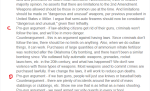
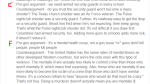
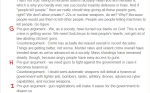
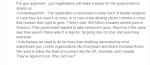
Saw this shared on FB. It covers counter-arguments for a lot of the most common pro-gun points you’ll see people raise. Long read, but very helpful.
This is amazing. Thank you dude for doing all this work.
Beginner masterlist
Thing to know:
- Theories on how magick works
Theurgy and Thaumaturgy- Magic Vs. Magick
- Types Of Witches
- List Of Magick Tools
- Magickal Tools
- List Of Different Theistic Doctrines
- List Of Acronyms For Magickal Concepts
- Derogatory terms that I have ran into in the magickal community
- The Crazy Stage
- Things to remember
- Belief
- Understanding substituting, and reworking in spells, and rituals.
- Reasons that a magick spell, or ritual would fail
- Spiritual Verification? UPG To Lore!
- How to undo a spell
- Things you can use instead of candles in witchcraft, and other forms of magick.
- Simple methods in order to help you opening your third eye
- Energetic Blockages
- Energetic Burnout
- Energetic Overflow
Basic:
- How to get started on your magickal journey!
- Chi Energy
- Visualization
- Exercise ideas for strengthening your visualization skills
- Centering
- Centering 2
- Grounding
- Grounding 2
- Power Hand
- Power Hand, and Receptive hand
- Affirmations
- Magickal Names
- Magickal Names 2
- Altered States Of Consciousness
- Book of Shadows (BOS)
- Pentagram, Pentacle, And Goat Of Mendes
- Invoking, And Banishing The Pentagram
- Casting And Undoing A Circle
- Bubble Of White Light Protection
- Warding In Witchcraft
- Ways to cleanse a room
- Shielding
- Raising the cone of power
- Liminality
- Taglocks, And Magickal Links
- Tarot Reading For Beginners
- Connecting To The Elements
- Spiritual Senses: The Clairs
Make:
- Making A Magickal Wand, Or Staff
- How exactly do you use a sigil?
- Creating your own tarot spreads, and oracle cards spreads
- Learning to write your own spells, and/or rituals
Curse:
Meditation:
Universal Maps:
Guides:
- Types of Personal Spirit Guides
- How To Find Your Spirit Guides, And Guardian Angels
- Spirit Guides
- The Higher Self
Laws:
Witches in the Ancient World
Witches were not revered, loved, or respected in ‘Pagan Times’. Magic was widely used in the ancient world, and more open for sure, but that didn’t change much when Christianity came around. Magic was still used, but the names were changed. Witches, however, were always detested.
I’ve noticed people trying to pin in back to Rome when it converted to Christianity, so let’s start there.
When Rome was still ruled by pagans, witchcraft was outlawed. The use of it was severely censured and could result in death. Practices like necromancy, maleficium, and the like were not accepted or tolerated. When it converted to Christianity, the law stayed the same. As they colonized, they brought it with them. But the fear of witches did not begin with the Romans.
The fear and detesting of witches was widespread in the ancient world.
Close by, pagan Greece had sects of witches who were feared by the locals. Their mysterious rituals involving mandrakes, crossroads, and ghosts caused a fair amount of alarm.
In the Ancient Near East, high magic flourished. Magic involving the stars, spirits, deities, and the like was popular. However, sorcerers and witches were not welcome. Charms and spells against witches were made out of clay, written on, and buried.
In the Americas (pre-colonization), witches were feared and hated. Still within indigenous communities, witches hold a bad reputation. To insinuate that someone is a witch is to make a very big accusation.
In the British Isles, you’ll hear lovely tales and myths of wizards, but witches are always given a tone of darkness. Wizards helped kings, aided in battles, found missing object, etc. Witches cursed heroes, stalled them, gave them obstacles, etc.
There is, of course, the argument of cunning folk, now called ‘white witches’. However, there was almost always a distinction made between cunning folk and witches. The people who called them witches were few and far between (and most likely disagreed with the cunning person’s use of magic). Cunning folk were the enemy of witches. They used spell and charm to attack and derail witch attacks. The Benandanti of Italy are a good example of this. Though they rode through the air on stalks of Fennel, cast spells, and attended secret meetings in spirit, they are not called witches.This is what I referred to before when I said there was a difference between magic and witchcraft. A rectangle is a square, but a square isn’t a rectangle. Similarly, witchcraft is magic, but not all magic is witchcraft.
Historically, witchcraft has always been a shadowy thing. It’s dark, secretive, dangerous, etc. It’s practiced on the edge of society. Magic is found all over in the ancient world, not just on the fringe. However, if you called a magician a witch, you would’ve either made them laugh or spit.The word was ‘reclaimed’ relatively recently. Its meaning changed. It was taken from its darker background. Instead, it became associated with pagan elements, some ceremonial practices, and other forms of magic.
That isn’t to say that the modern definition is a false one. Simply put, it means that it’s modern. It did not mean the same thing thousands of years ago, and for certain circles, it doesn’t mean the same thing now.
Witches have always been feared, according to the history and folklore left behind for us to see. Magic over time was called evil by many different faiths, despite the fact that it flourished in the very walls of the churches and temples they were taught in. It lived on in different names. Witches, for the most part, did not change their name. Many things were relabeled as witchcraft.
As far as history goes, try not to get it from witchcraft books. Read anthropological essays and journals. Read books written by historians who are passionate about the subject. Always double check facts. Put them to the test.
I took an anthropology of religion class last year in college and I think it really clarified some of these ideas.
Anthropology uses the term “witchcraft” in a very specific way. I can’t remember the exact wording, but it refers to people who use supernatural powers to cause negative change or harm against others. This is the definition applied to all cultures by the anthropological field. This does not reflect how those cultures would define witchcraft themselves however. Sometimes with cultures that practice witchcraft, there is a distinction made between “good” and “bad” ways of using witchcraft. Sometimes they give these different uses different names as well. Other times it is considered the same thing and is practiced by an entire community as part of their daily lives.
That being said, witchcraft as an idea is much more complex than we could easily define. This was stressed in my class during numerous occasions.
How we define religion, spiritual practices, and the supernatural are foggy and arbitrary. For example, “pagan religion” was not even considered a religion by pagans, but an essential part of their culture, until contemporary anthropologists and historians perceived it as such. The Celts, previous to Christianity, had no conception of “religion” by modern definition. It was simply what they did and believed. It was deeply connected to their community identity and perception of how nature works.
So saying that “witchcraft” was seen as “bad” by “people” is very vague to the point of inaccuracy. There is no real definition for witchcraft (beside the chosen working definition in anthropology). Over history certain groups have defined different practices as being considered part of witchcraft. They have applied these definitions to outside cultures and their practices, often without their consent. Being able to define these practices as witchcraft allows for them to pass moral judgement upon them. I would like to point out that the Greek clay petitions were not outlawed in ancient Greece or seen as immoral. They were part of their daily practice. The Greeks were advanced enough to understand that revenge, cursing, rage, and envy are part of nature. It was part of Greek identity and the identities of the deities they worshipped. Was murder seen as bad? Yes. But understanding the use of magic, which was assisted by the gods and fate, to get revenge on another was common. Also I would like to point out the some of the “feared” methods of witchcraft involving crossroads and mandrakes are referring to the goddess Hecate, the goddess of witchcraft in Greek culture. She was demonized in later years by the Romans but initially she was revered by the Greeks as a goddess of prosperity and protection. She was the honored goddess of the crossroads. Christianity brought with it a new understanding of morality which inevitably changed how different cultures viewed and defined practices now defined as “witchcraft” and “the occult”. Practices that a community may not have deemed as witchcraft such as divination, devil worship, cursing, or necromancy, would be included under that umbrella and would be perceived differently. Along with that changed perception is the rewriting of history. Pagan artifacts and any forms of existing writing, were destroyed or altered to reflect new Christian beliefs. Folklore and music began to include Christian elements. Thus distinctions were made between the romanticized but forgotten practices of the past and the now demonized practices of “witchcraft”. Some practices which originated with paganism were adopted under Christianity and deemed as holy gifts from God in the correct context (medieval herbalism for example). While their original context within pagan folk magic was demonized.
Witchcraft, as we know it now, is largely eclectic because all of these practices from different cultures were unified under the term “witchcraft” by Christianized morals, when originally they were seen as something different within their culture of origin. Saying “witchcraft” is almost dangerous because in each culture and time period you are referring to something completely different, and you are using a term they did not always consent to. The modern witch community is reclaiming the term as a whole and the practices under the Christianized definition. This also sets the modern witch community up to cultural appropriation because cultures not wanting to associate with the witchcraft community have been viewed as participants by outside cultures because of their practices.
But the bottom line is this, many communities who practice witchcraft (self defined) see it as a gray practice that can be used to maintain justice within their community or to gain a better understanding of the world. Many of said cultures are non white. It would be irresponsible to pass our ethnocentric perception of witchcraft and morality upon them and insist what they are doing is wrong. We cannot talk to pagan communities of the past. We cannot with certainty say what they believed about certain practices because traces of their beliefs have been mostly lost to time. We have to keep in mind the strong influences which were impacting their history and point of views. It would be equally irresponsible to assume they viewed pre-Christianized witchcraft as evil especially when the little evidence we do have suggests otherwise.
Also I sincerely did not mean any accusation towards Christians or their religion! I support all Christian witches but wanted to give some context to historical changes in these terms.
If any of you want to read more about paganism and witchcraft in anthropology feel free to message me and I’ll set you up with some videos and a great textbook on the topic!
Yes, there are outside influences, always, but I’m referring to a community’s view on its own people, not foreign ideas that were placed upon them.
No, non white cultures absolutely do not see witchcraft as a morally grey thing. Speak to the American Indigenous about witches. See what happens.
Watch what happens when someone says the word ‘witch’ in Africa, Brazil, Mexico, etc. They all have clear histories laid out that condemn such practices. Those histories sometimes go farther than when Christianity was imported and spread.
Plato mentions his distaste for the witches in Greece on more than one occasion I believe.
The evidence of Pre Christian witchcraft as being thought of as dangerous or dark is there to see in the narratives and tales left behind. It’s not difficult to find.
I also find it odd that paganism is being brought into the discussion, because witchcraft and paganism are two very different things, one classically viewing the other as dangerous (though I’ve already stated that numerous times). Witches were thought to manipulate and abuse the gods, not work with them and love them. This is also something that Plato writes about.I can’t speak for Greece, but pagan Rome outlawed maleficium, which is harm to any through the use of magic or magico-religious ritual. They didn’t allow it and it was punishable by death.
The image and idea of a witch and what they can do stays fairly consistent, through religious conversions and from culture to culture. This is something that is a nearly universal, almost timeless, idea.
The use of magic from culture to culture varies, but it’s present. I’m not talking about magic. I’m talking about witchcraft. The definition between the two is very clear. Witchcraft is a specific sect of magicians, doing very specific things, while magic in general is used widely without a set group of practitioners. Magic itself wasn’t demonized until later in time. There existed christian folk practitioners who worked for their communities, and this too goes across multiple cultures. Later, the idea of it being acceptable faded, and everything was lumped under the term witchcraft.
But the growth of the modern witchcraft movement and the use of foreign methods and ideas not related to witchcraft has little to do with christianity and more to do with the people who built the movements. They like the Eastern practices and philosophies and often enjoyed New Age movements, which borrowed heavily (stolen, really) from Eastern societies, as well as tribal cultures. They incorporated the same ideas and practices.
Of course, historical research is imperfect because we can’t speak to those times in the past, but we have evidence that either confirms or heavily suggests theories of how witchcraft was perceived in eras before christianity. Anthropology has given us definitions for a reason. They aren’t to be discarded.
Anthropologists also agree that folklore is more close to the belief of the people than standardized myth, and so when we look for history, folklore is one place that we look to find it.
I’ve said it before and I’ll say it again: a single course, book, and speaker does not make a strong argument. So many of those things are polluted with outdated theories (because even as we speak now, they change) and arguments.
I almost didn’t respond to this because I’m so tired of the same narrative being driven, but as soon as non white witchcraft was brought up, I felt compelled to. Until you’ve spoken to those people about what witchcraft was, is, and has been for hundreds of years, do not presume to know them through a history book. If you even tried to bring it up in a Native community, everyone would avoid you like the plague. It’s been that way since before Christians came over.
Witchcraft and magic are not the same. This idea is made quite clear by the historians and anthropologists who have studied these things (and yes, even study the modern witch movements now). The thought that they are, being pushed upon groups of people who have made it clear, is damaging and deeply worrisome.
Not trying to be a dick but without any sources this is just a long word rant with zero proof on how ancient cultures viewed anything. Please source things like this, it prevents the spread of misinformation within the pagan community.
Jesus, I’m not preaching to the pagan community, I’m trying to correct misinformation that spread within the witchcraft community.
They’re. Not. The. Same.I literally would not be able to cite all of these because of how vastly known this knowledge is among anthropologists. I’d have to cite every scholarly piece written on witchcraft over the past 20 years. We’ll start with a few websites and articles.
I’ve already cited Plato as saying not so great things about witches, so there’s one.
And there are too many tribes of natives to source all of them, so I’ll list a few.
This is an article that mentions witchcraft within the Six Nations communities.
In the Navajo-English dictionary, the word yee naaldlooshii means ‘witch’ or ‘skin-walker’. They are defined as people who can turn into animals and secretly travel places to do harm to others.
In the book, Yuchi Folklore: Cultural Expression in a Southeastern Native American Community, witches are said to be the darker counterparts of doctors or medicine men.
The beliefs among all of these are found in nearly every tribe across the US.In the book, African Folklore: An Encyclopedia, the sub-Saharan African belief about witchcraft is discussed, where it is said to be a ‘corrupted form of personal power’.
In ‘Mexican-American Folklore’, it is said that mal puesto, an insanity hex, is placed by a bruja, or a witch. It can be removed by a curandera, or a folk magic healer.
The book, Children of Cain, might do well as a bit of a history lesson about witchcraft in the British Isles.
The charms found in the Ancient Near East are on display at the Penn Museum, which should be able to be located in their archives.
The Roman law against maleficium can be googled and found easily, as it was law.
Shall I go on?
The evidence is quite literal everywhere, even on bloody Google. It’s not hard to find. This is from the Ancient World all the way up to the Early Modern Period. The funny thing is, most of these reference people working magic and other people being fine with it. It’s when witches enter the picture that things get ugly.The beliefs coming from the Ancient Near East, Greece, and Rome against witchcraft and magical harm are enough to put the whole ‘Christians demonized witchcraft’ to rest. Pagans knew what it was.

Jelly’s Original Resources Masterpost
All of these posts are my original work unless stated otherwise. All of these can be found in the tag, “Jelly’s Resources”. I also tag asks sent to me as “Jelly answers”. Beginner info can be found in #beginner info and #FAQ. Cherrie’s posts are shared with her permission.
Rebloggable FAQ posts:
Learning/Journaling:
- Writing Magic Posts: Personal/Experience versus Applicable Information
- Why UPGs Do Not Always Conflict
- Worksheet to Make In-Depth Correspondences
- Why you should be specific in correspondences
- How to Review Readings
Protection Magic/Safety:
Magic Business Series:
- Things to Know Before Starting a Magic Business
- How to Start an Online Magic Business
- How to Market Yourself on Tumblr
- How to Politely Refuse Service
- How to Price Magic Services
- How to Accept Criticism and Negative Reviews
Astral Adventures:
- Aerial Realm of King Gediel I
- Aerial Realm of King Gediel II
- Void Temple I
- Void Temple II
- Hellborn Demon Healer/Gamer I
- Hellborn Demon Healer/Gamer II
Spirit Interviews:
Identifying Spirits:
Demon Work (General) :
- Hell’s Different Locations and Aspects
- Lowborn Demons ,with contribution from swimminginscales
- How to Get a Lowborn Demon Companion/How to Summon a Lowborn
- Lowborn VIDEO GAMESSSSSSS
- About Lowborn Crystals/Crystal Caves
- “Offerings” For Lowborn Demons
- About Ubi: Incubi/Succubi, with contribution from swimminginscales
- About Ubi: Incubi/Succubi II with contribution from swimminginscales
- How to Summon an Ubi
- Article 69: Demon Dick
Identifying Spirits:
Goetic Demon Info:
- How to work with Goetics Without Getting Your Ass Kicked (Maybe)
- About Goetic/Deep Underground Hell and Hellborns Under Them
- Goetics to Avoid, in my Experience/Opinion
- Compiled Info: Decarabia
- Compiled Info: Prince Gaap
- Compiled Info: Duke Amduscias
- Interview: Duke Crocell
- Interview: Prince /President Gaap
- My personal experience with demons– -Old and I kinda disagree with some points now, specifically the “uwu goetics” overall vibe
- Are the Lesser Key summonings bad? –I kind of disagree with this now but I am leaving this so that people can understand my development, if that makes sense?
ENERGY WORK:
Energy Systems:
- Jelly’s Energy System Notes: Introduction
- Types of Energy Reading
- How to Read an Energy System
- Energy System NOTES that are DEFINITELY a thing and Yet Nobody Talks About Them
- What are energy channels?
- Energy System Reading Worksheet
Energetic Healing:
- Healing: Energy Systems
- Energy System Healing Worksheet
- Types of Energetic Blockages/Anomalies (and how to deal)
- Healing: Communicating With Points
- Dangers of a Direct Binding (aka Body Binding, Soul Binding)
- Detecting and Dealing With Energy Parasites
- Determining if a Healing is Beneficial
Energy Signatures
- What are Energy Signatures?
- Energy Signature Reading Worksheet
- Some Notes on Energy Readings/Work (old)
Reiki:
Etc Energy Work:
- What are Soundwaves?
- How do you get an energetic alignment, and how do you find out what it is? Ways that alignment happens? (with contrib from @sordhent)
- My Personal Energetic Healing System (old)
- Cast on Reblog Spells and Energy Construction of Magic
My Original Spells:
- “Take A Fucking Sip, Babes” Lust Spell
- Coffee Banishing Bath
- Friday Venus Incantation
- Saturn Incantation
- “Ode to Fate” Incantation
My Readings
Astrology:
- Sun Aspects in Astrology
- What I think I know about interpreting aspects
- Natal Chart Interpretation: A Very Social Person with Many Inner Struggles
Miscellaneous:
- Bonfire Magic
- Musical Witchcraft: Basic Terms and Associations
- Bonfire Magic
- Handwriting Magic: Introduction
- Private Blue Springs (in Florida) Water Dragon
My Patreon; Patreon contains my more advanced magic!
- Money Energy Notes
- Altar: Success, Financial Magic, Money
- In-Depth Financial Magic Correspondences
- Creating Redirection Wards
- Attaching a Message to a Ward
- Theory: How The Four Physical Elements can Affect Energy Manifestation
- Type Advantages and Piercing Wards
- Protection: Wards Types, Components, and Recommended Layers (Full Version)
- Ways to Improve Spirit Communication Besides Meditation
Cherrie’s Guides: Cherrie is a very experienced spirit worker who left tumblr because of the toxicity of this community, but still wanted her guides to be available. These have been posted here with her permission. These are HER guides, I do not claim credit for them at all.
 Candlelight-magick